Пресс-релиз о проведенном семинаре с 15-17 августа на тему «Экологическое нормирование и проектирование в сфере природопользования и охраны окружающей среды»
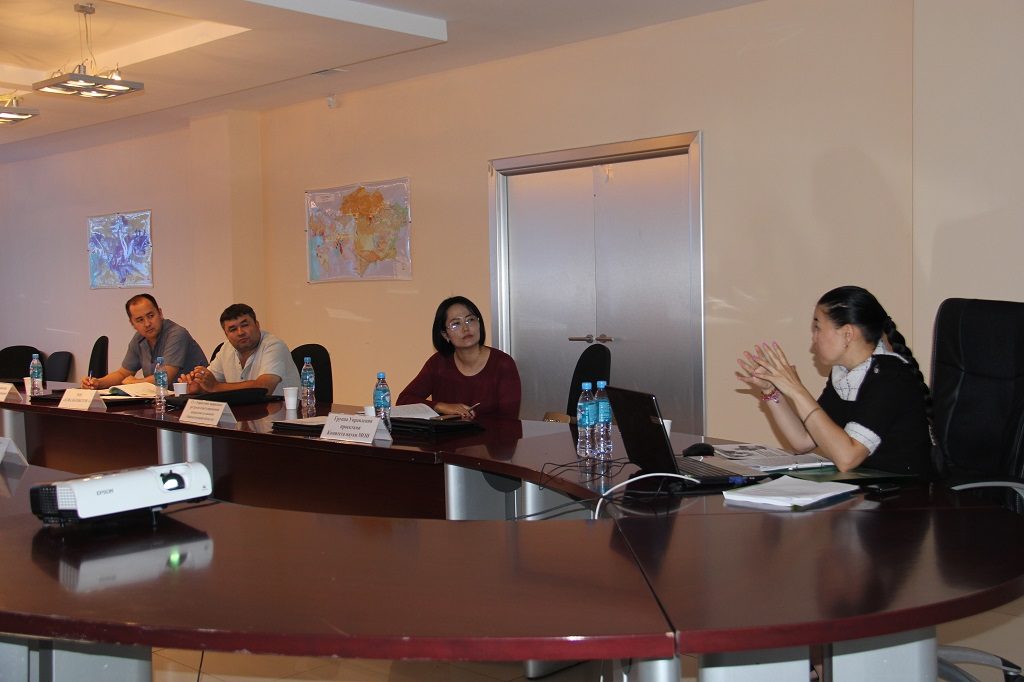
РГП на ПХВ «Информационно-аналитический центр охраны окружающей среды» МЭ РК в период с 15 по 17 августа 2018 года в г.Астана был проведен обучающий семинар для специалистов в области охраны окружающей среды и природопользования на тему «Экологическое нормирование и проектирование в сфере природопользования и охраны окружающей среды»
Участниками семинара были представители: АО «Алматинские электрические станции»; ТОО «Проектный институт «OPTIMUM»; ТОО «Асфальтобетон 1»; ТОО «СП «КазГерМунай»; Группа Управления проектами Комитета науки МОН РК ; ГУ «Управление природных ресурсов и регулирования природопользования Мангистауской области»; ИП «Чабан В.В.»; Учреждение НПО «Экосфера»».
На семинаре рассматривались следующие вопросы:
- Разрешения на эмиссии в окружающую среду;
- Экологическое регулирование;
- Внедрение Регистра выбросов и переноса загрязнителей в Казахстане;
- Хозяйствующая деятельность в сфере отходов ;
- Ведение Государственного кадастра отходов производства и потребления;
- Предоставление экологической информации;
- Особенности проведения ОВОС. Наличие ПЭК, ПУО, ППМ в проектах; Стратегическая экологическая оценка;
- Проводимая работа по обращению с твердыми бытовыми отходами;
- Порядок получения лицензии на осуществление работ по природоохранному нормированию и проектированию.
Лекции читали:
Каратаева Динара Ахметовна – Главный эксперт КЭРК МЭ РК
Досмакова Бизара Жакиевна – И.о.директора Департамента управления отходами МЭ РК;
Садвокасова Алия Малаевна – Руководитель управления ДГФЭИ РГП на ПХВ «ИАЦ ООС» МЭ РК;
Балабаева Алтын Ибрагимовна – Директор Департамента ГФЭИ РГП на ПХВ «ИАЦ ООС» МЭ РК
Ингербаева Жанат Умбетовна – Главный эксперт КЭРК МЭ РК;
Абдрахманова Жанара Беркутовна – Главный эксперт МЭ РК;
Букенова Саида Бекбулатовна – Руководитель управления кадастра отходов Департамента информационных технологий РГП на ПХВ «ИАЦ ООС» МЭ РК;
Кондратенко Михаил Геннадьевич –Директор Департамента информационных технологий РГП на ПХВ «ИАЦ ООС» МЭ РК.
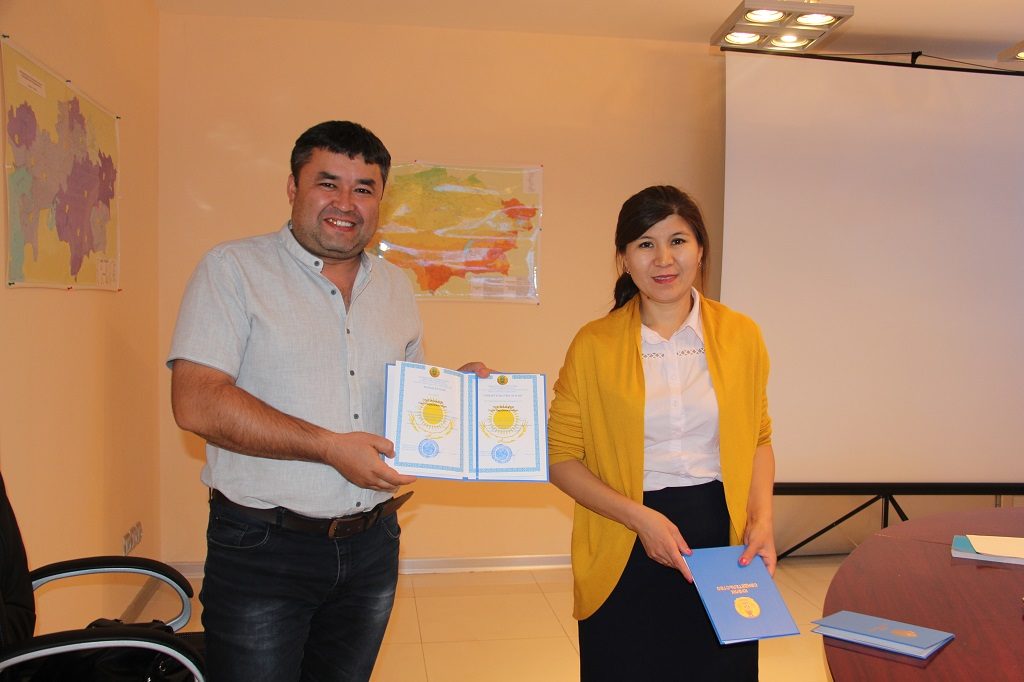
По окончании семинара слушателям вручены свидетельства.
Issues on implementation the register of emissions and transfer of pollutants in Kazakhstan

Issues on implementation the register of emissions and transfer of pollutants in Kazakhstan, assessment methods of mercury and resistant organic emissions have discussed in Astana within a seminar “Pollutants and mercury emissions to the environment: definition methods, inventory and adding in State register of emissions and transfer of pollutants of the Republic of Kazakhstan”. The seminar has taken place on April 11, 2018 in Astana in «Grand Park Esil» hotel.
Seminar was organized by Information and analysis center of environmental protection, Program of development of the UN in Kazakhstan and Center “Assistance to Sustainable Development” with assistance of the Ministry of Energy of the Republic of Kazakhstan.
Since 2017 industrial enterprises of category I have to provide reports on pollutants emissions for adding in the register of emissions and transfer of pollutants (PRTR) available to wide public. The list of substances which are subject to the report includes 86 substances including resistant organic pollutants, mercury and other dangerous chemicals.
The seminar was held for increasing of interested parties capacity regarding the Pollutants report, PRTR implementation in Kazakhstan and also pilot testing of portal for online emissions reporting.
60 people have participated in the seminar including representatives of the Ministry of Energy of the Republic of Kazakhstan, Administration of natural resources and regulation of natural recourse users, Department of ecology, Department of public health, mining, power, oil processing, metallurgical, chemical enterprises and SPA from Astana, Akmola, Karaganda, East Kazakhstan, Kostanay and Almaty regions.
Within session on State register of emissions and transfer of pollutants maintaining in Kazakhstan it was considered requirements of the Republic of Kazakhstan legislation for maintaining of State register of emissions and transfer of pollutants in the Republic of Kazakhstan, also the current situation on ratification of PRTR Protocol in Kazakhstan. National manuals projects by assessment methods of emissions for key and priority sectors have been submitted to participants.
During software session for providing the report in State PRTR, participants work with portal developed by RSE on PVC “Information analitycal center” which makes automatic process of PRTR maintaining. Architecture of created portal assumes three basic elements: application server as the main kernel, database server as the main data storage, private office as an instrument of users interaction with PRTR portal. Participants have taken part in portal testing, could enter data in a pilot mode and also have developed a number of recommendations about system improvement of online reporting.
During emission assessment sessions of mercury and other heavy metals to the environment and emissions assessment of resistant organic pollutants to the environment, participants have considered international techniques of emissions assessment developed by UNEP and EMEP.
Suggestion and recommendations which were announced within the seminar will be considered during PRTR implementation in Kazakhstan and improvement of methodical providing in the field of emissions assessment.


International experience and current Kazakhstan practice of implementing the pollutant release and transfer register

The seminar “International experience and current Kazakhstan practice of implementing the pollutant release and transfer register” was held on November 2, 2017 in Pavlodar.
The organizer was the Center “Cooperation for Sustainable Development”. The seminar was held within the framework of the joint project of the “Information and Analytical Center for Environmental Protection” RSE and the UNITAR “Global PRTR Implementation Project as a Tool for Reporting POPs, Dissemination and Raising Awareness for Kazakhstan”.
At the seminar 45 people have participated. Including representatives of the Department of Public Health Protection, the Department of Ecology, the Department of Statistics, the Department of Natural Resources and Environmental Management and other government agencies in the Pavlodar region, as well as mining, energy, oil refining, metallurgical and chemical industries, environmental design organizations and laboratories, Aarhus Center of Pavlodar and non-governmental organizations.
The main task of the seminar was to increase the potential capacity of specialists on the PRTR issue and formulate proposals for the development of methodological support for the introduction of PRTR in Kazakhstan.
Main provisions of the PRTR Protocol and international experience of its implementation, review of the PRTR introduction in Kazakhstan, current situation in the assessment of emissions and transfer of pollutants into the air, sewage, soil (from production and consumption wastes) were considered at the seminar.
The seminar participants took an active part in the discussion of the lists of pollutants for reporting on emissions into air, water and soil.
The seminar provided an opportunity to increase the potential capacity of specialists on the PRTR issue, to share experience and to formulate the most acceptable proposals for the development of methodological support for PRTR implementation in Kazakhstan.


«INTERNATIONAL EXPERIENCE AND CURRENT KAZAKHSTAN PRACTICE OF IMPLEMENTATION OF THE PRTR»

«INTERNATIONAL EXPERIENCE AND CURRENT KAZAKHSTAN PRACTICE OF implementation OF THE prtr»
Topical issues of introduction of the pollutant release and transfer register (PRTR) in Kazakhstan were discussed in Astana. The seminar “International experience and current Kazakhstan practice of implementing the pollutant release and transfer register” was held on October 30, 2017.
At present, works on ratifying the PRTR Protocol to the Convention on Access to Information, Public Participation in Decision-making and Access to Justice in Environmental Matters is carried out in Kazakhstan. The Environmental Code has been amended to introduce a State PRTR (Article 160).
The seminar was held within the framework of the Project “Information and Analytical Center for Environmental Protection” RSE and UNITAR “Global PRTR Implementation Project as a Tool for POPs Reporting, Dissemination and Raising Awareness for Kazakhstan” and with the support of the OSCE Program Office in Astana. The organizer was the Center “Cooperation for Sustainable Development”.
More than 70 people took part in the seminar. Among the participants of the seminar were representatives of state bodies: the Department of Environmental Monitoring and Information, the Department of Waste Management, the Department for Climate Change, the Committee for Environmental Regulation and Control of the Ministry of Energy of the Republic of Kazakhstan, the Department of Ecology of the Karaganda Region, the Committee on Statistics of the Ministry of National Economy of the Republic of Kazakhstan, IAC EP RSE on CEC of the Ministry of Energy of the RK, “Kazhydromet” RSE, “Zhasyl Damu” JSC. Industrial enterprises took an active part in the seminar: Samruk-Energo JSC, NC KazMunayGas JSC, JSC ArcelorMittal Temirtau JSC, KPO B.V., ATYRAU REFINERY LLP and other enterprises of mining, energy, oil refining, metallurgy, and chemical industries. The non-governmental sector was represented by regional Aarhus Centers and other NGOs.
The main goal of the seminar was to increase the potential capacity of specialists on the PRTR issue and formulate proposals for developing methodological support for PRTR implementation in Kazakhstan.
Participants are presented with the main provisions of the PRTR Protocol, an overview of the implementation of the PRTR in Kazakhstan, the National Proposals of the Republic of Kazakhstan on PRTRs, and the current requirements of the legislation of the Republic of Kazakhstan on providing information for public PRTRs.
The seminar was attended by the international expert – the head of the “Citizens Support Center”, the coordinator of the projects of the NGO Arnika (Czech Republic) Martin Skalsky. He answered to the questions of state bodies, industrial enterprises and NGOs on international experience and best practices for implementing the PRTR Protocol.
The listeners considered the current situation on the estimation of emissions and transfer of pollutants into the air, sewage, soil (from production and consumption wastes). During the discussion, the participants analyzed the list of pollutants for PRTR reporting.
Within the framework of the discussions the participants spoke on the main important aspects of PRTR implementation in Kazakhstan. Industrial enterprises are concerned about the introduction of additional forms of PRTR reporting, nongovernmental organizations – the availability of PRTR data and the possibility of their use.
All proposals made during the seminar will be reflected in the Workshop Protocol and will be used in the future when implementing the Project and implementing PRTRs in Kazakhstan.
Download report “История создания и основные положения Протокола РВПЗ” (Анисимова)


Press release following the results of EXPO-2017
Published: www:en.energo.gov.kz
On September 22, 2017 in the press center of the Office of the Prime Minister of RK a press conference on the results of the International specialized exhibition EXPO-2017 with the participation of the Deputy Minister of Energy of the RK Magzum Mirzagaliev was held.
The Ministry of Energy of the RK has selected 28 indigenous developments for the national pavilion Nur-Alem in such areas as renewable energy sources (such scientists as Albert Bolotov, Marat Koshumbayev, Nikolay Buktukov), in the sphere of waste management (such scientists as Alexander Ustimenko, Sergei Trebukhov), energy efficiency (such scientists as Amangeldy Taukenov, Askar Aryngazin, Dias Bayseitov) and others.
To implement the leading foreign technologies presented at EXPO, the Ministry of Energy of the Republic of Kazakhstan created an expert working group of more than 40 leading experts of national companies such as KazMunayGas, Kaztransgaz, KEGOC and others, as well as analytical experts in various energy sectors, representatives of the Ministry and subordinate structures.
The expert working group has made a list of 105 technologies from countries such as Austria, Germany, the Netherlands, Russia, Finland and others. According to their specifics, these technologies are divided into four areas:
– oil and gas – 27 technologies,
– coal and nuclear industry – 5 technologies,
– electricity, energy saving and RES – 44 technologies,
– ecology, including waste management, water treatment, air quality control – 29 technologies.
At the moment out of 105 technologies, 42 are in detailed development in 9 local companies, 2 universities are working with 14 of them and 2 akimats already works with 12 projects.
The list of technologies with the necessary information is posted on the Ministry’s website (link to the projects: http://energo.gov.kz/index.php?id=7), and was sent to local executive bodies and 170 companies.
Press service of the Ministry of Energy of the Republic of Kazakhstan
The round table on the issues of improving of the position of Kazakhstan in the World Bank “Doing Business” rating on the indicator” Connecting to the Power Supply System” was held in Almaty
Source: www.energo.gov.kz
On July 20, in Almaty, Atomic and Energy Supervision and Control Committee of the Ministry of Energy of the Republic of Kazakhstan together with “Alatau Zharyk Company” JSC held the round table on the issues of improving of the position of Kazakhstan in the World Bank “Doing Business” rating on the indicator” Connecting to the Power Supply System”, and also on the results of World Bank “Doing Business” subnational rating. The representatives of transmission and energy-supplying organizations of the Kazakhstan regions, local executive bodies of Kostanai, Zhambyl, Atyrau, Mangistau, Almaty, Kyzylorda, West Kazakhstan and North Kazakhstan oblasts, Almaty and Astana cities, as well as electric users of Almaty took part in the round table.
Within the round table, the power network connection procedure, signing of the contract for energy supply, legislation norms of the Republic of Kazakhstan in the sphere of electric power industry, aimed at improving the reliability of energy supply were explained, also the suggestions of further optimization of the power network connection process were made.
At the meeting the reports were made by the Chairman of the Atomic and Energy Supervision and Control Committee of the Ministry of Energy of the Republic of Kazakhstan Sungat Esimkhanov, the Chairman of the Board of “AZhC” JSC M. Umbetov, the Executive Director of “AlmatyEnergoSbyt” LLP A. Mukazhanov, as well as the representatives of Akimat of Almaty and “Atameken” NCE of Almaty.
According to the rating result, Almaty was noted as the most advantageous city for doing business and entrepreneurial activities. Due to the positive work evaluation of the local government, the round table participants shared the experience, the applying of the best law enforcement practice and achieving of the improvement through implemented measures with the representatives of akimats of 16 country regions, as well as with the transmission and energy-supplying organizations of Kazakhstan.
The topical issues in the sphere of electric power industry were discussed at the meeting, the guests, also, took an active part in the discussions and shared their own experience and practice, which allowed to collect a full picture of the regions development in certain areas.
Today, with modernization in all spheres of life, more attention is paid to consumer’s comfort, time and resources saving for receiving various services. Due to this, projects are being developed to optimize work processes, in particular in the energy sector, which could more easily and quickly respond to the consumers’ incoming requests and establish conditions for them. The development of a competitive business environment will allow the country’s economy to grow and create new opportunities for entrepreneurs.
Press Service of the Ministry of Energy of the Republic of Kazakhstan
The seminar was held within the framework of the project of the Ministry of Energy of the Republic of Kazakhstan and UNITAR “Global project on PRTR implementation as a tool for reporting POPs, dissemination and raising awareness for Kazakhstan”.
On June 28, 2017 in Astana a seminar “Implementation of the Protocol on the Pollutant Release and Transfer Register in Kazakhstan: current situation and necessary measures for implementation” was held.

The seminar was held within the framework of the project of the Ministry of Energy of the Republic of Kazakhstan and UNITAR “Global project on PRTR implementation as a tool for reporting POPs, dissemination and raising awareness for Kazakhstan”.

The seminar was attended by 50 people. Including representatives of the Ministry of Energy of the Republic of Kazakhstan, RSE “IAC EP”, RSE “Kazgidromet”, Statistics Committee of the Ministry of National Economy of the Republic of Kazakhstan and other government bodies, the OSCE Center in Astana, industrial and design organizations, Aarhus Centers and non-governmental organizations.
The seminar presented the specifics of PRTR implementation in Kazakhstan, the main facts about the Protocol on Pollutant Release and Transfer Registers. During the discussion, participants assessed the current situation of PRTRs in Kazakhstan. A detailed article-by-article analysis of the requirements of the Protocol on PRTRs made it possible to clarify the existing PRTR mechanisms in Kazakhstan. Based on it, the participants formulated proposals on further measures to develop PRTRs in Kazakhstan. These proposals will be used in the future when developing methodological support for the implementation of PRTRs in Kazakhstan, as well as in the preparation of national proposals for PRTRs.


Through the questionnaire, participants assessed the knowledge and training needs for PRTR issues. The analysis of the questionnaires made it possible to determine the necessary topics and questions for the training modules planned for development during the project. The project plans to train target groups: government agencies, industrial enterprises, non-governmental organizations and the media. The training seminars will be held in November 2017 and in February-March 2018 in Astana, Pavlodar and Aktobe.
World’s first solar panel road opens in Normandy village
Source: www.theguardian.com
Route in Tourouvre-au-Perche cost €5m to construct and will be used by about 2,000 motorists a day during two-year test period
France has opened what it claims to be the world’s first solar panel road, in a Normandy village.
A 1km (0.6-mile) route in the small village of Tourouvre-au-Perche covered with 2,800 sq m of electricity-generating panels, was inaugurated on Thursday by the ecology minister, Ségolène Royal.
It cost €5m (£4.2m) to construct and will be used by about 2,000 motorists a day during a two-year test period to establish if it can generate enough energy to power street lighting in the village of 3,400 residents.
In 2014, a solar-powered cycle path opened in Krommenie in the Netherlands and, despite teething problems, has generated 3,000kWh of energy – enough to power an average family home for a year. The cost of building the cycle path, however, could have paid for 520,000kWh.
Before the solar-powered road – called Wattway – was opened on the RD5 road, the panels were tested at four car parks across France. The constructor was Colas, part of giant telecoms group Bouygues, and financed by the state.
Normandy is not known for its surfeit of sunshine: Caen, the region’s political capital, enjoys just 44 days of strong sunshine a year compared with 170 in Marseilles.
Royal has said she would like to see solar panels installed on one in every 1,000km of French highway – France has a total of 1m km of roads – but panels laid on flat surfaces have been found to be less efficient than those installed on sloping areas such as roofs.
Critics say it is not a cost-effective use of public money. Marc Jedliczka, vice-president of Network for Energetic Transition (CLER) told Le Monde: “It’s without doubt a technical advance, but in order to develop renewables there are other priorities than a gadget of which we are more certain that it’s very expensive than the fact it works.”
Jean-Louis Bal, president of renewable energy union SER, said: “We have to look at the cost, the production [of electricity] and its lifespan. For now I don’t have the answers.”
Colas said the panels have been covered with a resin containing fine sheets of silicon, making them tough enough to withstand all traffic, including HGVs. The company says it hopes to reduce the costs of producing the solar panels and has about 100 other projects for solar-panelled roads – half in France and half abroad.
IEA moves to enhance global gas security
Source:www.iea.org
TOKYO — While the rise of the liquefied natural gas market has accelerated the globalization of natural gas, the energy security implications of this transformation have attracted much less attention. Through an extensive analysis of global gas data, a new report from the International Energy Agency seeks to provide more transparency into the LNG market.
There is no doubt that global gas markets are well supplied today. While this is positive for global gas security, the new analysis from the first Global Gas Security Review, released today in Tokyo, warns that LNG markets are less flexible than is commonly believed.
A growing share of LNG capacity is offline – mostly because of a lack of enough gas to feed into the system but also because of security and technical problems – meaning the market has less extra capacity than assumed. Between 2011 and 2016, the level of unusable export capacity has doubled, disabling about 65 bcm of gas, which is equal to the combined exports of Malaysia and Indonesia, the world’s third- and fifth-largest exporters. A period of low oil and gas prices could further worsen the situation.
However, the Global Gas Security Review finds that LNG contract structures are becoming less rigid, increasing market liquidity. In 2015, about 40% of LNG contracts had fixed destination terms, down from 60% for contracts signed up to the year 2014.
While shorter term contracts are gradually becoming more common, buyers are also accepting longer contracts in exchange for increased flexibility in the final destination in order to better respond to market conditions. Flexible contractual structures are important for gas security as they enable to aggregate gas volumes at a lower cost from various regions.
LNG’s share of the global gas market is set to increase in the coming years. In fact, LNG supplies have grown at a faster pace than total gas consumption. Providing a factual picture and analyzing its implications for gas security matches well with the IEA’s core mandate about energy security.
“The growth in the global gas trade, along with the diversification of supply sources, is improving the security of supply,” said Fatih Birol, the Executive Director of the International Energy Agency. “But there is still a need to be vigilant on gas security as the changing nature of the market means that regional demand and supply shocks may now be felt in more distant places than ever before.”
The report provides detailed case studies on Europe and Japan. For Japan, it show that while gas markets reacted relatively effectively to the loss of nuclear generation in Japan after the Fukushima nuclear accident, the factors that made that possible cannot always be counted on in the future.
The Global Gas Security Review builds on an extensive set of data and other substantial inputs from industry and will be produced on an annual basis. It is accompanied by country specific statistics; data on outages of LNG export capacity by type and region; flexible LNG demand by importers; flexible LNG supply by importers, producers and portfolio players; and flexible gas demand and supply in Europe.
Eight African Home Solar Startups Win $4 Million in Scaling Off-Grid Energy Enterprise Grants
Source: www.renewableenergyworld.com
Launched by President Barack Obama in 2013, Power Africa is achieving unprecedented success in expanding access to electricity and spurring sustainable development across the African continent, particularly in remote rural areas south of the Sahara, where best estimates say two of every three people lack access to electricity.
Attending the UN Framework Convention on Climate Change (UNFCCC) conference in Marrakesh, Power Africa Coordinator Andrew M. Herscowitz on Nov. 14 announced $4 million in new Scaling Off-Grid Energy Grand Challenge Enterprise (SOGE) Grant awards for eight African startups that are preparing to launch or expand their presence in sub-Saharan Africa’s fast-growing home solar energy market.
Launched under the Power Africa umbrella by USAID’s U.S. Global Development Lab, the U.K.’s Department for International Development (DFID) and the Shell Foundation, the $36 million SOGE provides seed funding for African solar energy start-ups to support geographic expansion, test new business models and tap into private and public financing.
Expanding Energy Access and Putting Africans on a Clean Energy Development Path
It’s anticipated that proceeds from the latest round of SOGE grants will create as many as 120,000 new off-grid solar electricity connections in African communities.
Some commonly and long-held myths are being laid to rest as Power Africa and program participants progress towards realizing a goal of installing 30,000 MW of new, more efficient emissions-free energy capacity and 60 million new home and business electricity connections across the continent.
Prominently, these inclusive, local community-driven public-private sustainable development partnerships are proving that cash-poor rural Africans are not only willing but able to pay for access to electricity, and that entrepreneurial African solar energy providers can make innovative use of solar energy technology and develop business models that can generate healthy, reliable returns on investment.
Rural Africans are already paying for energy — typically kerosene — and at prices that eat up substantially higher portions of their average monthly incomes than is the case for Americans or Europeans, Chris Jurgens, USAID U.S. Global Development Lab director for the Center for Transformational Partnerships and USAID lead for SOGE explained during an interview.
“Kerosene isn’t cheap, it’s dirty and it can be dangerous,” he noted.
Moving Up the Energy Ladder
SOGE grant award winner d.light started out specializing in pico-solar products and services. They have since moved, or are moving, on to expand geographically and offer complete home solar solutions of varying sizes and configurations, as well as a variety of off-grid, DC home solar devices and appliances, such as LED lighting, fans, TVs and even refrigerators.
“Pico-solar products, such as solar lanterns, are the first rung on the ‘energy ladder’ — small scale home solar solutions that can power LED lighting and perhaps charge cell phones are the next step up and it continues on up from there,” Jurgens told Renewable Energy World. “Given they have positive experiences with their initial off-grid home solar products and services, we’re finding out that rural residents are keen to take the next step up the energy ladder.”
Home Solar Growth Factors
The rapidly declining cost of solar PV panels, inverters, batteries and other home solar energy system components is the most fundamental factor supporting development and growth of nascent home solar markets across the region, Jurgens continued.
“The second thing that has really gotten over the barrier of rural Africans’ ability to pay for electricity is mobile communications and e-payment technology,” he said.
As a rough guide, the home solar systems offered in nascent markets across the region can cost anywhere from $75-$250. The popularity and widespread use of mobile e-payments in countries such Kenya, Tanzania and Uganda is enabling a new class of consumers to purchase electricity as they do mobile communications, in small, easy to digest payments.
These “pay as you go” business models make leasing or purchasing affordable and very convenient. More rural residents are signing up for and making greater use of them, thereby entering or becoming more engaged in local and national economies as a result, Jurgens said.
A third critical supporting element is the response and support from leading multinational corporations and international development agencies. The leading household solar enterprises — many of which are Power Africa partners — have proven very successful when it comes to leveraging the results of initial seed funding to attract investments from both private and public sector organizations.
Creation of a Positive Socioeconomic Feedback Loop
Kenya-based D.light, for instance, recently raised $20 million in venture capital in the U.S. In addition, Acumen, Microsoft and the UN Foundation recently joined the SOGE program as supporting partners.
A positive, mutually beneficial feedback loop is emerging as a new class of rural Africans gain access to electricity, start or expand local businesses and build up credit histories. Home solar market players are leveraging all this when they approach banks and other consumer finance providers to bolster their chances of obtaining loans and at lower interest rates than would have been possible otherwise.
All this bodes well not only in terms of lifting emissions-free off-grid home solar into the mainstream of developing African economies, but doing so in ways that foster inclusive, sustainable and local socioeconomic development.